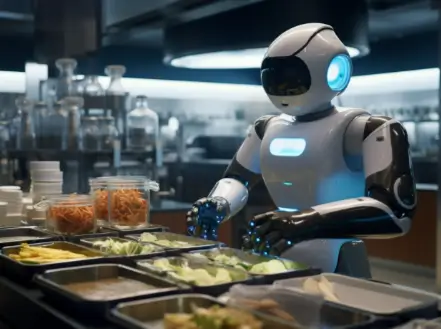
Artificial intelligence reshapes every facet of food delivery with data-driven precision. It forecasts demand, balances menus, and prices dynamically to align supply with customer needs. Routes, timing, and driver assignments are optimized in real time to boost reliability. In kitchens, AI enables automation and rigorous quality control, while personalized experiences and secure, fraud-resistant payments deepen trust. The result is a scalable, responsible system that hints at further opportunities beyond the next order.
What AI Does to Forecast Demand and Keep Menus Balanced
Forecasting demand and maintaining balanced menus are core capabilities of AI in food delivery, enabling platforms to anticipate surges, optimize inventory, and tailor offerings to evolving patterns.
The approach blends predictive pricing with granular demand segmentation, aligning supply with consumer intent.
This data-driven strategy supports strategic agility, reducing waste while expanding choices for customers seeking freedom and reliability in dining options.
How AI Optimizes Routes, Times, and Driver Assignments for Faster Deliveries
AI-driven routing, timing, and driver-assignment systems integrate real-time traffic, order priority, and delivery windows to minimize travel time and maximize on-time performance. By aggregating live analytics, these platforms optimize delivery routing, reduce latency, and balance workload, aligning fleet capacity with demand.
The result is scalable efficiency, empowered operators, and freedom to redefine service levels through data-driven driver assignment.
See also: cloudelder
AI-Powered Quality Control and Kitchen Automation for Consistency
Quality control and kitchen automation elevate consistency by applying AI at the point where operations translate data into tangible product. AI powered quality systems monitor texture, temperature, and timing, enabling real-time adjustments. Consistency checks drive process optimization, reducing variance across batches.
Kitchen automation accelerates repeatable workflows, while data-informed governance supports scalable, transparent operations for a freedom-seeking, quality-driven delivery ecosystem.
Personalization, Engagement, and Safety Through AI-Driven Customer Experiences
How can AI transform each customer interaction into a precisely tailored, safe, and engaging experience across every touchpoint? AI-driven systems illuminate personalization engagement patterns, predicting preferences and timing with granular precision. They orchestrate seamless safety experiences—fraud detection, secure payment flows, and transparent risk alerts—while preserving autonomy. The result is a scalable, user-centric model that empowers freedom through data-informed, trustworthy service journeys.
Frequently Asked Questions
How Is AI Trained for Food Delivery Data Privacy?
AI training privacy is achieved through robust data anonymization, minimization, and governance, enabling compliant model learning while preserving user autonomy. Visionaries embrace scalable safeguards and transparent metrics, ensuring data anonymization and privacy-aware AI training underpin strategic, freedom-centric food delivery innovation.
Can AI Predict Delivery Delays Due to Weather?
In an unseen dawn, AI forecasting envisions routes bending around weather impact, predicting delays with disciplined foresight. The system analyzes patterns, empowering operators to act, aligning delivery freedom with reliability, resilience, and data-driven strategic adaptability.
What Are Ethical Concerns in AI for Kitchens?
Ethical concerns in AI for kitchens center on transparency, accountability, and bias mitigation, challenging operators to balance innovation with human-centric values. Visionary, data-driven strategies protect kitchen labor rights, promote fair automation governance, and uphold informed worker consent and autonomy.
How Does AI Handle Surge Pricing Transparency?
Surge pricing transparency emerges through standardized dashboards and audit trails, enabling operators to articulate rationale without ambiguity. Data privacy training informs pricing models, ensuring consumer rights are preserved while strategic, scalable optimizations drive freedom via informed, ethical decision-making.
Do Robots Truly Improve Customer Trust With AI?
Silence unfolds like a measured clock, signaling that robot trust grows when AI empathy aligns actions with human needs, yet skepticism remains. Robots symbolize reliability; AI empathy bridges perception gaps, guiding strategic, data-driven improvements toward freedom-oriented customer confidence.
Conclusion
Artificial intelligence is redefining the entire food-delivery ecosystem with data-driven precision and scalable intelligence. A single incident illustrates the shift: a rider with a smart route saved five minutes thanks to real-time traffic insights, while the kitchen pre-emptively adjusted portions based on预测 demand. Across menus, routes, and safety, AI orchestrates faster, more reliable experiences. The result is not just efficiency but a strategic, future-ready platform where predictive analytics, automation, and personalization co-create consistent excellence.