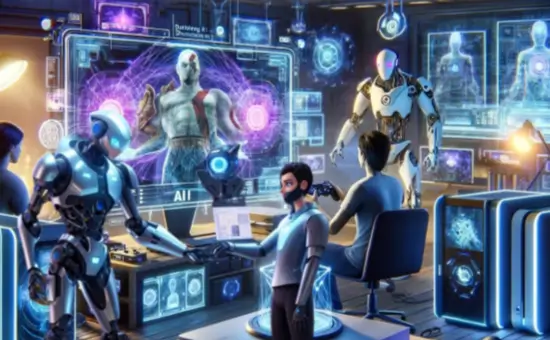
Artificial intelligence in gaming enables responsive NPCs, adaptive difficulty, and procedurally generated content. It coordinates pathfinding, emotion modeling, and narrative pacing to maintain immersion without constant manual tuning. Developers train and refine AI through simulation, data curation, and iteration to reveal edge cases and improve cohesion. The result is open-ended experiences that balance player agency with scalable challenge. The implications extend beyond novelty, inviting a closer look at how intelligent systems reshape interaction and storytelling.
What AI Brings to Modern Games
Artificial intelligence reshapes modern games by enabling more responsive, adaptive, and believable systems that automate routine content and empower complex behavior without excessive manual tuning.
It enhances immersion balance through dynamic pacing, adaptive challenges, and believable NPCs, while preserving player agency. This evolution prompts ongoing ethics considerations, addressing transparency, data use, and bias, ensuring innovation aligns with evolving player freedoms and shared societal values.
Ai-Driven Systems That Shape Gameplay
AI-driven systems increasingly steer gameplay by managing dynamic content, adaptive difficulty, and believable NPC behavior without constant manual tuning.
These architectures enable procedural storytelling, where narrative segments adapt to player choices, and dynamic difficulty adjusts challenges in real time.
The result is a responsive sandbox: streamlined design, richer exploration, and strategic pacing that preserves player agency while maintaining systemic coherence.
See also: How Artificial Intelligence Is Used in Food Delivery
How Developers Train and Refine Game AI
Developers train and refine game AI by iterating on data, models, and evaluation metrics to align behavior with design goals. They leverage procedural data curation, simulation, and ablation studies to expose edge cases, inform adjustments, and prevent regressions.
Crafting NPC personalities and optimizing pathfinding are central tasks, balancing realism with responsiveness while preserving player agency and creative freedom.
The Future of AI in Gaming Experiences
What next for the evolving frontier of gaming experiences, as AI technologies mature and permeate design, narrative, and interactivity?
The future envisions adaptive worlds where emotional modeling informs responsive systems and nuanced NPCs, while procedural storytelling scales complexity without sacrificing coherence.
Designers leverage data-driven creativity, balancing autonomy and intent, to craft immersive, open-ended engagements that respect player freedom and drive meaningful exploration.
Frequently Asked Questions
How Does AI Affect Game Accessibility for Players With Disabilities?
AI improves accessibility by enabling accessible interfaces and inclusive design, tailoring difficulty and input methods, captioning, and adaptive controls; it empowers players with disabilities while preserving freedom to explore, strategize, and experience games on their terms.
Can Players Train or Customize AI Opponents Themselves?
Players can customize AI opponents via in-game tooling or external mods, enabling opponent training to tailor behavior. This enables player customization while maintaining safeguards; advanced options balance transparency, predictability, and freedom for curious, tech-savvy audiences.
What Are the Ethical Concerns Around AI in Games?
Ethical concerns around AI in games include Bias in AI behavior and Data privacy concerns, as systems learn from player data, potentially reinforcing stereotypes, exposing sensitive traits, and enabling intrusive profiling, while designers navigate consent, transparency, and fair access.
How Does AI Handle Procedural Generation and Replayability?
Procedural generation optimizes variability; replayability tuning refines challenge curves. Patterns emerge, adapt, recombine landscapes, missions, and rewards. Algorithms sample seeds, evaluate diversity, balance difficulty, and plot long-tail replay paths, ensuring fresh experiences while preserving coherent design and player autonomy.
What Skills Do Developers Need to Work With Game AI?
Developers pursuing game AI require expertise in AI modeling and debugging techniques, machine learning pipelines, and gameplay scripting, enabling precise behavior, robust systems, and scalable experimentation; they cultivate autonomy while maintaining rigorous validation, iteration, and principled documentation for creative freedom.
Conclusion
Artificial intelligence in gaming quietly orchestrates immersion, balancing pacing, challenge, and narrative flow through responsive systems and adaptive NPCs. As data-driven models learn from vast play patterns, games evolve with less manual tuning while maintaining player agency. Developers harness real-time AI to craft dynamic worlds, test edge cases, and refine behavior. The result is a more believable, endlessly interactive experience—like a well-oiled orchestra that never misses a beat, keeping players hooked and coming back for more. It’s the tip of the iceberg.